
Kickstart Blogs
Published: Oct 2026 · 7 min read
by Adam Scott
How Dispatch Scheduling Software HVAC Reduces Scheduling Conflicts and Delays
Introduction
Running an HVAC business involves more than repairing heating systems or installing air conditioning units. Contractors must coordinate technicians, manage service appointments, respond to emergency calls, plan travel routes, and keep customers informed throughout the day. As the number of service requests increases, managing everything manually becomes more difficult. Double-booked appointments, missed service visits, inefficient technician assignments, and unexpected delays can quickly disrupt daily operations.
Understanding how dispatch scheduling software HVAC helps solve these challenges is essential for businesses that want to improve efficiency and deliver reliable customer service.
KickStart helps HVAC businesses simplify their daily operations by bringing scheduling, dispatching, technician tracking, customer communication, and invoicing together in one connected platform. With better visibility into appointments and field teams, HVAC business owners can assign jobs more efficiently, respond to changing schedules, and reduce the administrative workload. By using the right dispatch scheduling system, contractors can minimize scheduling conflicts, avoid unnecessary delays, and keep their teams organized as their businesses grow.
The Common Scheduling Challenges HVAC Businesses Face
Many HVAC businesses can manage their daily operations effectively when they have only a few technicians and service appointments. However, as the customer base grows, coordinating multiple technicians, handling emergency repairs, and keeping track of changing appointments becomes increasingly complicated. Without a centralized scheduling system, even a small change in one appointment can affect the entire day’s schedule.
Here are some common scheduling challenges HVAC contractors face:
Double-booked appointments: Assigning multiple jobs to the same technician at overlapping times can lead to missed appointments and frustrated customers.
Emergency service disruptions: Unexpected heating or cooling breakdowns can force contractors to rearrange existing appointments, creating delays throughout the day.
Inefficient technician assignments: Sending technicians to jobs that do not match their availability, skills, or location can waste valuable time and resources.
Travel time and route problems: Poor planning between service locations increases travel time, fuel costs, and the risk of late arrivals.
Poor customer communication: When schedules change, failing to notify customers promptly can lead to confusion, complaints, and a negative service experience.
Each of these challenges can reduce technician productivity, affect customer satisfaction, and limit the number of jobs an HVAC business can complete daily.
The Top Benefits of HVAC Dispatch Scheduling Software
Understanding the benefits of dispatch scheduling software HVAC helps contractors see how the right system can simplify daily operations. From preventing appointment conflicts to improving technician coordination, a centralized platform gives HVAC businesses better control over their schedules and helps them deliver more reliable service as they grow.
Benefit 1: Prevent Double Bookings and Scheduling Conflicts
Managing multiple appointments manually increases the risk of assigning overlapping jobs to the same technician. Dispatch scheduling software helps contractors organize service appointments, review technician availability, and maintain a clearer daily schedule. This makes it easier to identify potential conflicts before they disrupt operations.
With KickStart, HVAC businesses can manage job schedules more efficiently and keep appointments organized as service requests increase.
Benefit 2: Assign the Right Technician to Each Job
Not every HVAC service call requires the same skills, tools, or experience. Assigning technicians without considering their availability and job requirements can lead to unnecessary delays and additional visits.
A centralized dispatch system helps dispatchers review technician schedules and coordinate assignments more effectively. This allows HVAC businesses to make better use of available staff and ensure jobs are assigned with greater care.
Benefit 3:Reduce Delays Caused by Emergency Calls
Emergency repairs are common in the HVAC industry, especially during extreme weather conditions. An urgent service request can disrupt several planned appointments if dispatchers have no clear view of their existing schedules.
Dispatch scheduling software helps businesses manage appointments and coordinate schedule changes more effectively. By reviewing available technicians and upcoming jobs, dispatchers can respond to urgent requests while minimizing disruption to other customers.
Benefit 4: Improve Technician Coordination and Travel Planning
Poorly coordinated service visits can increase travel time, fuel expenses, and technician downtime. When technicians travel between distant job sites unnecessarily, they have less time to complete additional service calls.
Dispatch scheduling software helps contractors organize assignments based on technician availability and job locations. Better coordination can reduce unnecessary travel and help technicians complete their daily workloads more efficiently.
How These Benefits Compound as the HVAC Business Grows
The benefits of dispatch scheduling software HVAC contractors use become increasingly valuable as their businesses expand. More customers mean more service appointments, more technicians to coordinate, and more opportunities for scheduling conflicts. A well-organized dispatch process helps HVAC businesses manage this growing workload without allowing daily operations to become unnecessarily complicated.
Better scheduling helps contractors organize more service calls and make productive use of available technicians. Fewer scheduling conflicts mean less time spent rearranging appointments and resolving avoidable mistakes. When technicians can complete their assigned jobs more efficiently, businesses can serve more customers while maintaining consistent service quality.
Improved dispatching also supports better customer relationships. When appointments are organized and schedule changes are communicated promptly, customers know what to expect. A reliable service experience can encourage repeat business, maintenance bookings, and positive recommendations. At the same time, more organized job records and invoicing processes help contractors keep administrative work under control as the number of completed jobs increases.
KickStart supports this process by bringing job management, scheduling, technician coordination, customer information, and invoicing together in one connected platform. As an HVAC business grows, having these essential operations organized in one place can help owners maintain visibility into daily activities and make more informed decisions about their resources.
Conclusion
Dispatch scheduling software HVAC helps contractors manage service appointments, assign technicians efficiently, and reduce scheduling conflicts and delays. By organizing job details, tracking technician availability, and improving communication, HVAC businesses can keep daily operations running smoothly and provide a better customer experience.
With KickStart, HVAC contractors can simplify scheduling, coordinate field technicians, manage customer information, and handle invoicing in one connected platform. Instead of spending valuable time managing schedules manually, teams can focus on completing jobs on time and delivering reliable service.
FAQs
Dispatch scheduling software for HVAC businesses helps contractors organize service appointments, assign jobs to technicians, manage schedules, and track daily operations from one platform.
It helps contractors view technician availability, organize appointments, and avoid overlapping bookings. This makes it easier to manage multiple service requests and keep daily schedules organized.
Yes. It helps businesses coordinate technicians, prioritize urgent jobs, and organize appointments more effectively, reducing avoidable delays and improving response times.
HVAC contractors should look for job scheduling, technician assignment, customer management, dispatch coordination, invoicing, payment tracking, and reporting features.
KickStart helps HVAC contractors manage scheduling, dispatching, customer information, job tracking, invoicing, and payments through one connected platform. This helps reduce manual administration, improve coordination, and keep daily business operations organized.
related Posts
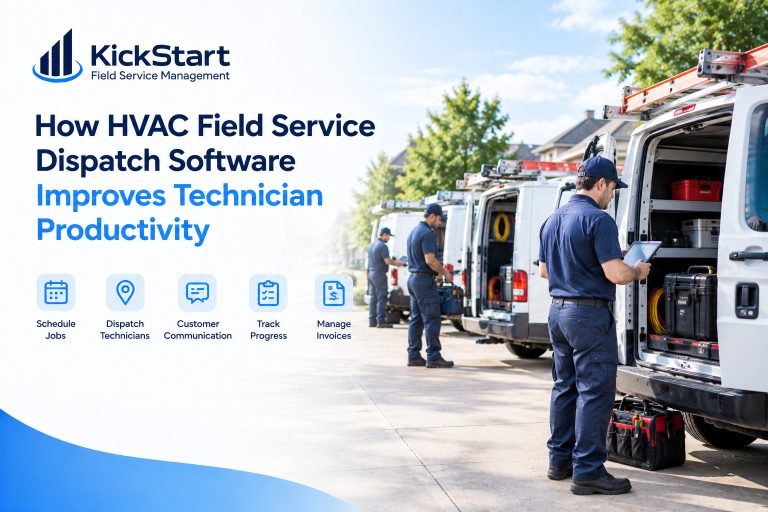
How HVAC Field Service Dispatch Software Improves Technician Productivity?
How Dispatch Scheduling Software HVAC Reduces Scheduling Conflicts and Delays?